HOA Fence Rules Explained: A Homeowner’s Guide to Getting Your Fence Approved
- August 21, 2026
If you live in an HOA community, your fence has to satisfy two separate rulebooks, not one. Your city or county has its own fence regulations, and your homeowners association has a completely separate set of rules on top of that. Most expensive fence mistakes happen when a homeowner checks only one of these and assumes it covers both, only to find out mid-project, or worse, after the fence is already built, that the other rulebook says something different.
This guide walks through what HOAs typically restrict, how to find your specific community’s actual rules, how to choose a fence that’s likely to get approved the first time, how the approval process works, and what your real, lawful options are if you’re denied.
Where HOA Fence Rules Actually Come From
HOA fence rules live in your community’s CC&Rs (Covenants, Conditions, and Restrictions), plus any supplementary architectural or design guidelines the board maintains and updates over time. This is a private, binding contract you agreed to when you bought your home, not a government law, and that distinction matters more than it might seem, since it changes what recourse you actually have if you disagree with a decision.
Your city or county has its own separate fence rules, covering things like maximum height and how close a fence can sit to your property line. We cover both of those in detail in our fence height regulations guide and our guide to fences on the property line. Both sets of rules, HOA and government, apply to your property at the same time. A fence that’s perfectly legal under your city’s zoning code can still violate your HOA, and satisfying one set of rules never excuses violating the other. In practice, this means the HOA’s rules are often the stricter of the two, since an association can generally impose tighter limits than the city requires, but it can’t override a city rule to allow something the city prohibits.
What HOAs Typically Restrict (Check This Before You Shop for a Fence)
Before you settle on a fence style, it’s worth checking your HOA’s rules against these five common restriction points:
- Height. Many HOAs set a different limit for front yards than backyards, and that limit can be stricter than what your city allows.
- Materials. Some materials are commonly restricted or banned outright, particularly chain-link in front-facing areas.
- Color and finish. Even where a material is approved, the HOA may require a specific stain, paint color, or finish rather than a natural look.
- Placement and setback. HOAs can require a fence to sit farther from the property line than your city’s zoning code requires.
- Gates and maintenance. Ongoing condition standards, and sometimes specific gate hardware or style requirements, are often part of the same guidelines.
Checking these five points before you fall in love with a particular fence style saves you from redesigning a project after a denial.
How to Actually Find Your HOA’s Fence Rules
Before you can follow the rules, you need the actual documents, not secondhand descriptions from a neighbor or a general sense of what “seems standard.” Your HOA management company or board can provide the current CC&Rs and any separate architectural guidelines document, these are sometimes two different files, and the more specific guidelines document is often what actually governs details like exact height limits and approved materials.
It’s worth confirming you have the current version. Design guidelines in particular tend to get updated by the board over time, so the rules you skimmed when you bought the house may not match what’s enforced today. If anything in the documents is unclear or seems to conflict with something else, ask the HOA management company directly and get the answer in writing before you finalize your plans, a quick email now is far cheaper than a denied application later.
Choosing a Fence That’s Likely to Get Approved
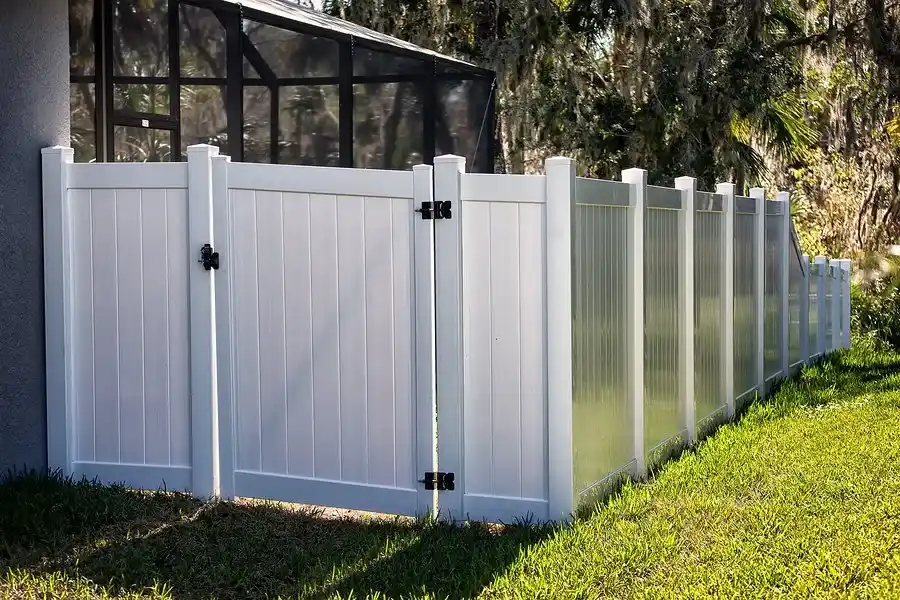
Many HOAs favor vinyl, composite, or ornamental aluminum specifically because these materials hold a consistent, uniform look across an entire neighborhood over time, they don’t fade, warp, or weather unevenly the way some other materials can. Our vinyl fencing guide covers pricing and durability if that’s a direction your HOA supports.
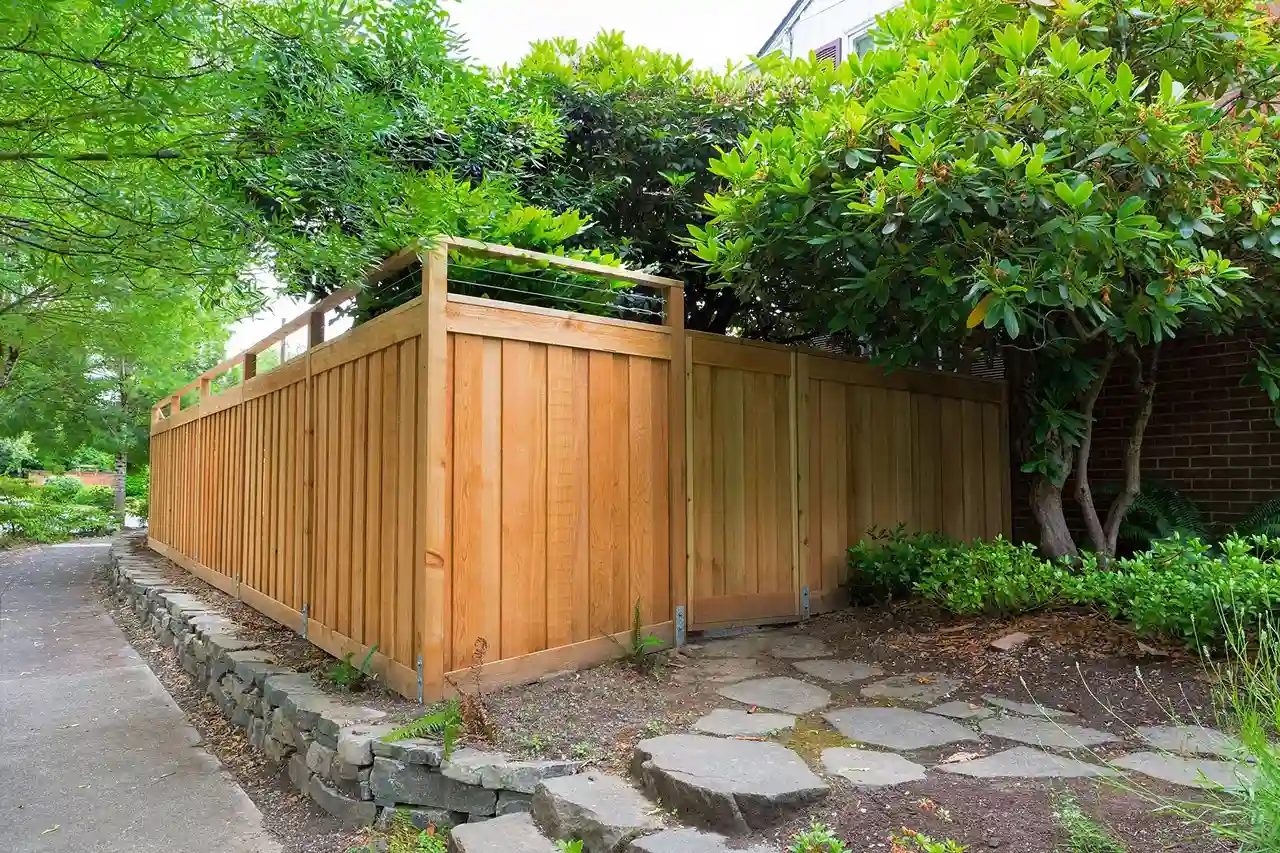
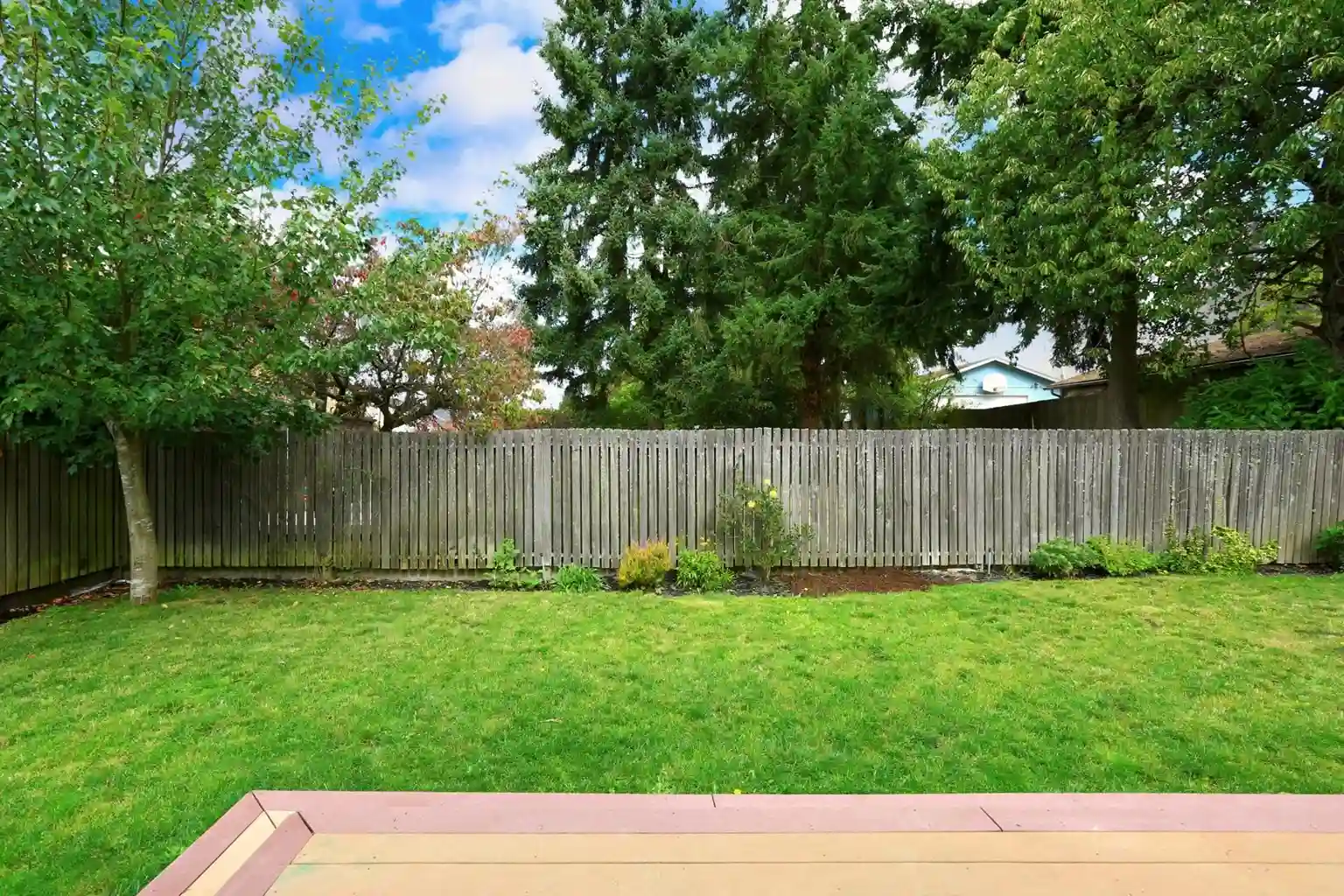
Wood is often allowed too, but frequently with conditions, a specific stain or paint color rather than a natural finish, for example, or a requirement that the finished side face outward toward the street or neighboring yard. Our wood fencing cost guide walks through pricing by style and species if wood fits your HOA’s guidelines. Chain-link, by contrast, is one of the most commonly restricted materials in HOA communities, particularly in front-facing yards, since it doesn’t match the more finished aesthetic most associations are trying to maintain.
One of the simplest ways to improve your odds of approval: look at what’s already standing in your neighborhood. If most homes have a consistent fence style, matching it, rather than introducing something noticeably different, tends to move through architectural review with far fewer questions and far less back-and-forth.
How HOA Fence Approval Actually Works
The process is fairly consistent across most associations, even though the specific timeline and paperwork vary:
- Submit a written application to the Architectural Review Committee or Design Review Board. This typically includes a site plan showing the fence’s location relative to your property lines and home, the materials and color you’re proposing, and sometimes contractor licensing or insurance information.
- Wait for review. Most associations take somewhere between two and six weeks, depending on how often the committee meets and how complete your submission is. Incomplete applications are one of the most common causes of delay, so it’s worth double-checking you’ve included everything the application form asks for before submitting.
- Receive a decision. This usually comes as one of three outcomes: approval, conditional approval (often requiring a specific material or color change before final sign-off), or denial with a stated reason.
- Get approval in writing before construction starts. A verbal “should be fine” from a board member doesn’t protect you if a dispute comes up later, and it’s not uncommon for verbal impressions to differ from what the committee actually decides on paper.
Submitting a complete, specific application the first time, rather than a vague request, is the single biggest factor in how smoothly this process goes.
What Happens If You Build Without Approval
Building before getting sign-off is a genuinely expensive gamble. Consequences commonly include a formal violation notice, fines that accrue for as long as the violation continues, and in more serious cases, an order to remove the fence entirely, at your own expense, on top of whatever you already spent building it. That last outcome is significantly more costly than the few weeks it takes to go through proper review in the first place, and it’s a common enough mistake that most experienced fence contractors will ask for proof of HOA approval before starting work, precisely because they’ve seen projects get torn down mid-build.
That said, HOAs generally can’t simply fine you out of nowhere. Most governing documents, and many state statutes, require the board to provide written notice of the specific violation, a clear description of the corrective action needed, a compliance deadline, and a hearing before any fine is actually imposed. If your association skips these steps, the fine itself may not hold up, regardless of whether the underlying violation was real. Keep any notices you receive and respond within whatever timeline they specify, ignoring a violation notice tends to make the situation harder to resolve later, not easier.
If Your Request Is Denied: What You Can Actually Do
A denial isn’t necessarily the end of the process. Here are the real, lawful options available, in roughly the order worth trying them.
Ask for the specific reason in writing, and compare it directly against your CC&R language. A denial based on a clearly published standard, like an approved material list, is generally harder to challenge than one based on vague “aesthetic” concerns that aren’t written down anywhere. If two similar fence applications in your neighborhood got different outcomes, that inconsistency is also worth raising, associations are generally expected to apply their own rules evenly across homeowners in similar situations.
Use the formal appeal process. Most associations have one, often a hearing in front of the board itself, separate from the original architectural committee decision. Bring your written denial reason, your CC&R citations, and any supporting material, like photos of comparable approved fences nearby, to make your case concrete rather than just asking for reconsideration.
Request a variance, if your governing documents allow for one. This is a formal, documented exception process built into many HOA structures, not a workaround, and it typically requires you to explain in writing why your specific situation, a corner lot with an unusual sightline, a slope that makes the standard height impractical, or something similar, warrants an exception to the standard rule.
Consider whether a Fair Housing Act reasonable accommodation applies, though this is a narrow path that only fits a specific situation. Federal fair housing law can require an HOA to grant an exception to its rules, including fence rules, when it’s genuinely necessary because of a resident’s disability. This isn’t theoretical. In August 2024, the Sixth Circuit Court of Appeals addressed exactly this question in a fence dispute, Debity v. Vintage Village Homeowners Ass’n, where the family argued that a solid wooden privacy fence, rather than the HOA-approved see-through wrought-iron style, was necessary for a child’s disability-related need for privacy. The appeals court sent the question back for a jury to decide, rather than resolving it outright, which shows how fact-specific these cases actually are.
This path only applies if the requesting person genuinely meets the legal definition of disability and can show the specific fence is necessary, not simply preferred. According to the joint HUD and Department of Justice guidance on reasonable accommodations, a housing provider, including an HOA, can still deny a request if it isn’t disability-related or would impose an undue burden. Courts have sided with associations when a resident couldn’t show they met that legal bar. If you believe this applies to your situation, this is a conversation for a real estate attorney familiar with fair housing law, not something to navigate alone based on a blog post.
For most homeowners without a disability-related need, the honest answer to “how to get around HOA fence rules” is that there generally isn’t a shortcut, the appeal and variance process above is the real path, which is exactly why choosing a compliant fence style from the start saves so much time and money.
Getting Your HOA-Compliant Fence Built
Once you know what your HOA allows, the next step is pricing out a fence that fits those requirements and getting it installed correctly the first time. Our fence installation cost guide breaks down pricing by material and project size, and you can get a personalized estimate based on your yard and material choice once you’re ready to move forward.
FAQs
Most commonly height, approved materials, color and finish, placement or setback distance, and gate or maintenance standards. These come from your community's CC&Rs and any supplementary architectural guidelines, and they can be stricter than your city's own rules.
Typically two to six weeks, depending on how often your association's review committee meets and how complete your application is. A thorough, specific submission generally moves faster than a vague one.
You can, but it's a costly risk. Unapproved construction commonly leads to violation notices, fines, and in some cases an order to remove the fence at your own expense, which almost always costs more than waiting for proper approval.
HOA rules come from a private contract (your CC&Rs) that you agreed to when buying your home. City and county rules are government law. Both apply to your property at the same time, and meeting one doesn't excuse violating the other.
Most associations have a formal appeal process, often a hearing before the board. It's also worth requesting the specific reason for denial in writing and checking it against your actual CC&R language before appealing.
Estimate Your Fence Cost — Fast & Free
Get a Quick Quote With Estimate in Minutes.
Latest Post