Fence Height Regulations: The Complete US Guide for Homeowners
- August 22, 2026
There’s no single federal law that tells you how tall your fence can be. Fence height is regulated locally, city by city and county by county, which is exactly why the same question gets a different answer depending on where you live. That said, once you look at enough municipal codes side by side, a clear pattern emerges. Most US jurisdictions handle fence height the same general way, they just plug in slightly different numbers.
This guide walks through that national pattern, then covers the specific places where state law actually changes the picture, mainly pool safety and neighbor cost-sharing. Wherever a number appears below, treat it as a strong starting point, not a substitute for checking with your own city or county before you build.
Why Do Fence Height Restrictions Exist?
Fence height rules exist for a handful of practical reasons, not arbitrary ones. Shorter front yard fences preserve sightlines for drivers backing out of driveways and pedestrians crossing at intersections, a driver pulling out of a driveway needs a clear line of sight to the sidewalk and street before a solid fence blocks that view entirely. Keeping front yards more open also maintains a neighborhood’s overall streetscape rather than turning every block into a row of walled-off properties, this is as much a planning and property-value consideration as a safety one, and it’s part of why front yard limits tend to be far more consistent from city to city than backyard limits are.
Taller backyard fences, on the other hand, are allowed because privacy and security matter most in the space where people actually spend their outdoor time, and the safety tradeoffs are different once you’re set back from the street rather than facing it directly. Pool fences add a third motivation entirely: preventing small children from wandering into water unsupervised, which is why pool barrier rules tend to be stricter, more specific, and more consistently enforced than ordinary yard fence rules. This is also the one category where you’ll see state governments step in directly rather than leaving the decision entirely to local zoning, which says something about how seriously that particular risk is treated compared to an ordinary height dispute.
How Fence Height Regulation Actually Works: Three Layers
Before getting into specific numbers, it helps to understand that fence height can be controlled by up to three separate sources at once, and all three can apply to your property simultaneously.
Local zoning and building codes are the baseline for almost every homeowner. Your city or county sets the actual height limits by zone (front yard, backyard, corner lot) and decides when a permit is required.
State law rarely sets a general fence height limit, but it does show up in two specific places: pool barrier safety requirements, and in some states, rules about sharing the cost of a boundary fence with a neighbor.
HOA or deed restrictions are private, not government law, but they’re just as binding on you if you bought into that community. An HOA can set a lower height limit than your city allows, and the city limit doesn’t override it.
How Fence Height Is Actually Measured
One detail that trips up a lot of homeowners: height is typically measured from finished grade, meaning the actual ground level at the base of the fence, not from some other reference point. On a sloped yard, this can matter quite a bit, a fence that’s 6 feet tall at one end might measure taller or shorter at the other end if the ground isn’t level, and some jurisdictions have specific rules for how to handle that, such as measuring in graduated sections rather than treating the whole run as one continuous height.
A related question that comes up often: if a fence sits on top of a retaining wall, does the wall’s height count toward the fence limit? In most codes it doesn’t, the retaining wall and the fence above it are typically measured separately, since the wall is addressing a grade change rather than functioning as part of the fence itself. That said, this is exactly the kind of detail that varies by jurisdiction, so it’s worth a direct question to your building department if your property has any significant grade change. Decorative post caps or toppers are sometimes given a small exemption, an inch or two, in certain codes, but this also varies enough that it’s worth confirming locally rather than assuming.
Front Yard Fence Height Limits
Most US jurisdictions cap front yard fences at 3 to 4 feet. This is the most consistent number in fence regulation nationwide, and it’s tied directly to the sightline reasoning covered above.
So, can you put a 6 foot fence in your front yard? In most places, no, not without applying for a variance from your local zoning board. A variance is a formal request to deviate from the standard rule, and it isn’t guaranteed, your zoning office will typically want to see a specific reason the standard limit doesn’t work for your property. If privacy is your main goal, the more realistic path in most areas is a 6-foot fence in the backyard and a shorter, more decorative fence in front.
Backyard and Side Yard Fence Height Limits
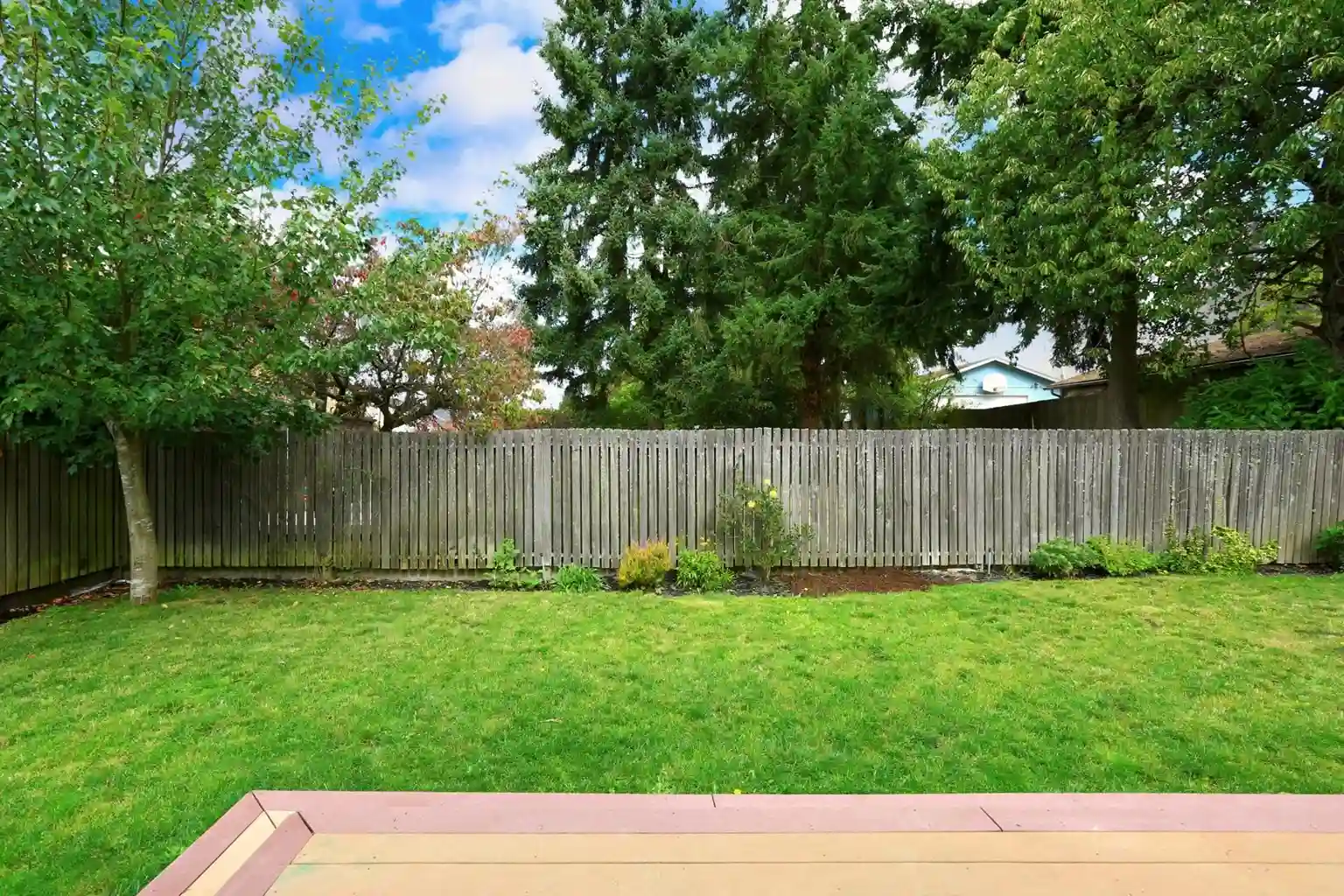
This is where privacy fences typically live. Most jurisdictions allow up to 6 feet in backyards and side yards behind the front building line, and some allow up to 8 feet with a permit or an approved variance. If you’re planning a full privacy fence, this is generally the zone where you have the most flexibility, though the exact ceiling still depends on your local code.
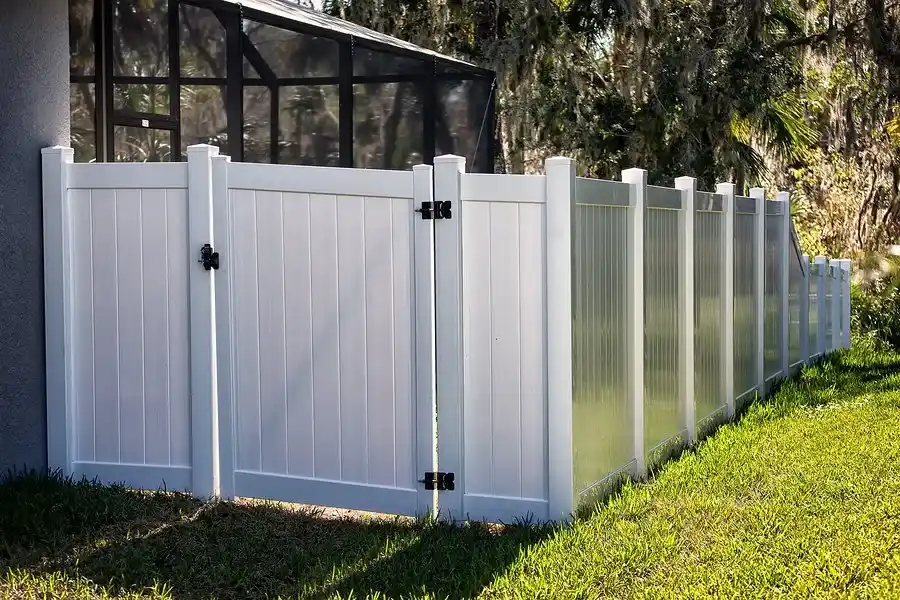
If you’re weighing materials for a taller privacy fence, our guide to wood fence cost walks through pricing by style and wood species once you know what height you’re working with. Vinyl is worth a look too if low maintenance matters more to you than the traditional wood look, our vinyl fence cost guide covers pricing and durability tradeoffs at the same backyard heights.
Corner Lots and Sight Triangles
Corner lots face a rule that interior lots don’t: the sight triangle. Because a corner property borders two streets instead of one, many jurisdictions apply a stricter height limit, often somewhere around 2.5 to 3 feet, within a defined triangular area near the intersection. The goal is simple: keep that specific zone open enough that a driver approaching the intersection can actually see cross traffic and pedestrians before entering it.
If you own a corner lot, this is one of the first things to confirm with your local planning department, since the triangle’s exact size and the height limit within it vary by jurisdiction, and building into it, even accidentally, is a common and avoidable violation.
The National Pattern at a Glance
Here’s the general pattern most US municipalities follow. Treat this as a starting reference, not your specific local code.
| Zone | Typical Height Pattern |
| Front yard | 3 to 4 feet |
| Backyard / side yard (behind front building line) | 6 feet, sometimes up to 8 feet with a permit |
| Corner lot sight triangle | Often 2.5 to 3 feet within the triangle |
| Pool enclosure | Varies by state, see below |
Permits: When You’ll Need One
Permit requirements vary locally, but a common threshold shows up across many jurisdictions: fences taller than 6 feet in a backyard often require a permit, even in areas where a 6-foot fence itself doesn’t. Pool enclosure fences are frequently required to have a permit regardless of height, given the safety stakes involved. Fences that sit fully within the standard front or backyard height limits are sometimes permit-exempt entirely, but this exemption disappears the moment you go above the local threshold or add a pool.
A typical permit application asks for a site plan showing your property lines, the proposed fence location, the fence height and materials, and sometimes post depth or footing specifications. Processing time ranges from a few days in smaller jurisdictions to several weeks in busier permitting offices, so it’s worth building that timeline into your project plan rather than assuming you can start construction the same week you apply. If your proposed height or placement doesn’t fit the standard rule, the variance process is the formal path to an exception, but it typically requires a specific justification, a site plan, and sometimes a public notice period, so it’s rarely a fast option if your timeline is tight.
Once you have a sense of what height and permit situation applies to your project, our fence cost calculator can give you a personalized estimate based on your actual yard dimensions and material choice.
HOA Rules Can Be Stricter Than the Law
If your property is governed by an HOA, its covenants, conditions, and restrictions (CC&Rs) can impose tighter limits than your city’s zoning code allows. It’s common for HOAs to cap front yard fences at 4 feet and backyard fences at 6 feet, similar to the general municipal pattern, but they often go further by also restricting materials, colors, and styles, a code-compliant chain-link fence, for example, might still violate an HOA’s requirement for wood or vinyl. Some HOAs also require architectural review board approval before you install anything, separate from and in addition to whatever permit your city requires.
A fence that’s perfectly legal under your city’s code can still violate your HOA’s rules, and CC&R violations can lead to fines or a forced removal at your own expense, which makes this one of the more expensive mistakes to make on a fence project since it means paying for the same work twice. Review your governing documents before finalizing any fence design if you’re in an HOA community, and when in doubt, a quick email to your HOA’s management company before you order materials is a lot cheaper than finding out after installation.
Pool Fence Height Requirements Vary by State
Pool barriers are one of the few places where state law, not just local zoning, sets a specific height requirement directly. And unlike the general yard-height pattern, the pool barrier minimum genuinely differs from state to state.
| State | Minimum Pool Barrier Height | Notable Detail |
| Florida | 4 feet | Under Florida Statutes §515.29, a house wall can serve as part of the barrier if it has no door or window that opens directly to the pool |
| Virginia | 4 feet | Under Virginia Code §15.2-921, localities are authorized to adopt pool fencing ordinances, and gates must fasten at a height of at least 4 feet |
| Arizona | 5 feet | Under Arizona Revised Statutes §36-1681, Arizona requires a full four-sided barrier and does not allow the house wall to serve as one side, a stricter standard than Florida’s |
These three states illustrate the range rather than the full national picture. If you have a pool or are planning one, confirm your specific state’s requirement and any additional local ordinance before building the enclosure, since getting this wrong is both a safety issue and a common source of failed inspections.
Fence Height Between Neighbors: What the Law Actually Covers
“Legal fence height between neighbors” actually covers two different questions that get mixed up constantly. The first is a zoning question: how tall can a fence be near a shared property line, which is answered by the front yard, backyard, and corner lot rules covered above. The second is a completely separate question: does your neighbor have to help pay for it? That’s boundary-fence law, and it varies significantly by state.
- California: Under the Good Neighbor Fence Act of 2013 (Civil Code §841), adjoining landowners are presumed equally responsible for the reasonable cost of a dividing fence, and 30 days’ written notice is required before starting work.
- Virginia: Under Virginia Code §55.1-2821, adjoining landowners generally must build and maintain division fences at joint, equal expense, unless one of them chooses to let their land lie open or they agree otherwise.
- Illinois: Cost-sharing under the Illinois Fence Act (765 ILCS 130) applies specifically between adjoining landowners using their land for agricultural purposes, it was written for rural livestock containment and doesn’t generally apply to typical suburban neighbors.
- Texas: Texas generally does not require neighbors to split fence costs. A narrow exception exists under Property Code §143.001, but it only applies in counties with a population of more than 20,000 and less than 100,000, meaning most Texas homeowners fall outside it entirely.
What to Do Before You Build
A quick sequence to follow before finalizing any fence project:
- Check your local zoning or building department for your specific front yard, backyard, and corner lot height limits.
- Review your HOA’s CC&Rs if you’re in a governed community, since those rules can be stricter than the city’s.
- If a pool is involved, confirm your state’s minimum barrier height and any additional local ordinance.
- Once you know your allowed height, get a real sense of project cost. Our fence installation cost guide breaks down pricing by material and height, and you can get a personalized number for your yard through our online fence calculator.
Fence height rules aren’t designed to make homeownership harder, they’re built around real safety and neighborhood considerations that show up in nearly every US city in some form. Once you know your zone’s limit, whether it’s your city’s front yard rule, your HOA’s stricter cap, or your state’s pool barrier requirement, the rest of the project is just picking the right material and getting an accurate quote.
FAQs
It depends on where the fence sits on your property and your local zoning code. Most US jurisdictions allow around 3 to 4 feet in front yards and up to 6 feet in backyards and side yards, but the specific number always comes from your city or county.
In most places, not without a variance. Front yard fences are typically capped at 3 to 4 feet to preserve sightlines for drivers and pedestrians. A 6-foot fence usually needs to go in the backyard instead, unless your local zoning board approves an exception.
Most jurisdictions allow up to 6 feet in the backyard, and some permit up to 8 feet with a permit or variance. This is generally the part of your property with the most flexibility for a tall privacy fence.
Mainly for sightlines (drivers and pedestrians near streets and driveways), neighborhood streetscape, and safety, particularly around pools. Corner lots and pool enclosures tend to have the strictest rules for exactly these reasons.
It depends entirely on your state. California and Virginia generally presume equal cost-sharing for a boundary fence, while Texas generally does not require it outside a narrow, population-specific exception, and Illinois's cost-sharing law is aimed at agricultural land, not typical suburban properties.
Estimate Your Fence Cost — Fast & Free
Get a Quick Quote With Estimate in Minutes.
Latest Post