
Your dog figured out the gap in the fence before you did. One minute he’s in the yard, the next he’s two blocks over investigating someone’s trash cans. It happens more than people think, and it usually comes down to one thing: the wrong fence for that specific dog.
Not every fence keeps every dog in. A 4-foot chain link fence works fine for a Beagle. It’s basically a starting block for a Husky. And an invisible fence? That might stop your dog from leaving, but it won’t stop a coyote from walking right in.
So before you spend anywhere from $1,000 to $8,000 on a fence, it’s worth knowing what you’re actually buying.
Now let’s break each one down.
5 Questions to Ask Before You Pick a Dog Fence
Skip these and you might end up with the wrong fence entirely.1. How big is your dog?
Small dogs (under 40 lbs) can usually be contained with a 3–4 ft fence. Large breeds like German Shepherds, Retrievers, and Huskies need at least 6 ft.2. Does your dog jump?
Some dogs, especially working breeds, can clear a 5 ft fence without breaking a sweat. If yours is a jumper, you need 6 ft minimum, plus a coyote roller or angled top rail.3. Does your dog dig?
Diggers need a fence that goes into the ground, not just sits on top of it. A buried wire mesh or concrete footer makes a big difference.4. Does your dog chew?
Wood panels are no match for a determined chewer. Go with chain link, vinyl, or aluminum instead.5. Is your dog reactive?
If your dog barks and lunges at everything it sees, a solid privacy fence cuts off the visual trigger. Chain link or rail fences won’t help much here.Best Fence Materials for Dogs Side by Side
Here’s how the main fence types stack up for dog owners:| Fence Type | Best For | Height Options | Avg. Cost/Linear Ft | Dog-Proof Rating |
| Chain Link | Diggers, budget buyers | 4–6 ft | $10–$40 |  |
| Vinyl Privacy | Reactive/excitable dogs | 4–6 ft | $20–$40 | |
| Wood Privacy | Medium dogs, aesthetics | 4–6 ft | $15–$50 | |
| Aluminum | Small to medium dogs | 3–5 ft | $20–$45 | |
| Invisible Fence | Supplement use only | N/A | $3–$9 | |
Chain Link Fence: The Practical Choice for Most Dogs
Chain link is the workhorse of dog fencing. It’s tough, it lasts, and it’s the most affordable physical fence you can put around a yard. A 4 ft chain link fence runs around $10–$25 per linear foot installed. Go up to 6 ft and you’re looking at $25–$40 per linear foot depending on gauge and your location. It works especially well for dogs that dig. Install it flush with the ground and bury a wire mesh apron 12–18 inches underground, and most dogs won’t be able to tunnel out. The one downside: it’s completely see-through. If your dog reacts to every person and squirrel that walks by, chain link can actually make that worse. For reactive dogs, pair it with privacy slats or choose a different material altogether.Vinyl Fence: The Best All-Around Dog Fence
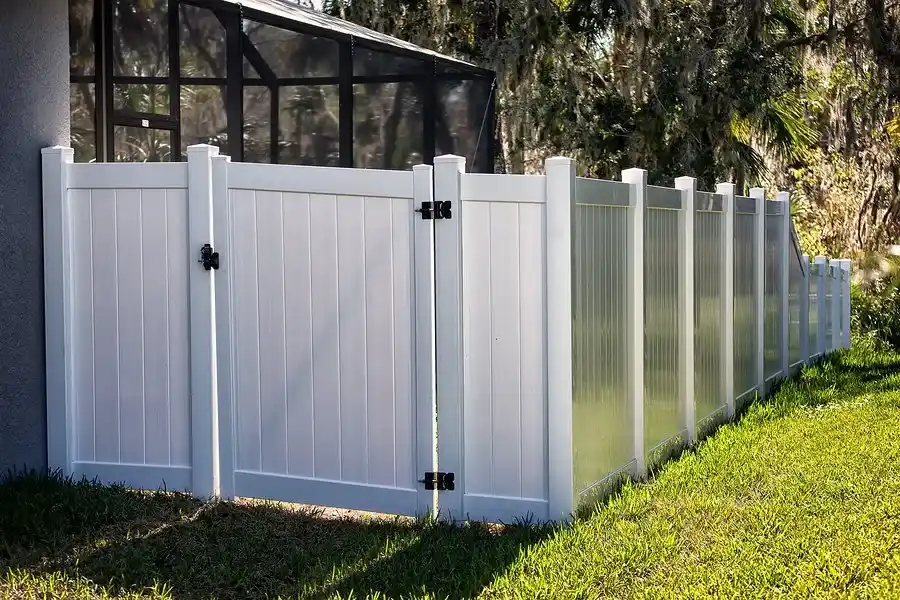
If you want one fence that handles most dogs in most situations, vinyl privacy fence is it. Solid panels mean your dog can’t see what’s happening on the other side of the fence. That alone reduces barking and anxiety for reactive breeds significantly. And unlike wood, vinyl doesn’t splinter, rot, or warp. Dogs that chew on fence panels won’t get splinters in their gums. And you won’t need to repaint or reseal it every couple of years. Vinyl privacy fences typically run $20–$40 per linear foot installed. Yes, it costs more upfront than chain link. But it lasts 50+ years with barely any maintenance, so the long-term cost actually works out. The only situation where vinyl falls short: if your dog is a serious jumper. Standard vinyl panels top out at 6 ft, so add a roller top if needed. See full pricing in our vinyl fence cost guide.Wood Fence: Good Look, Some Trade-Offs
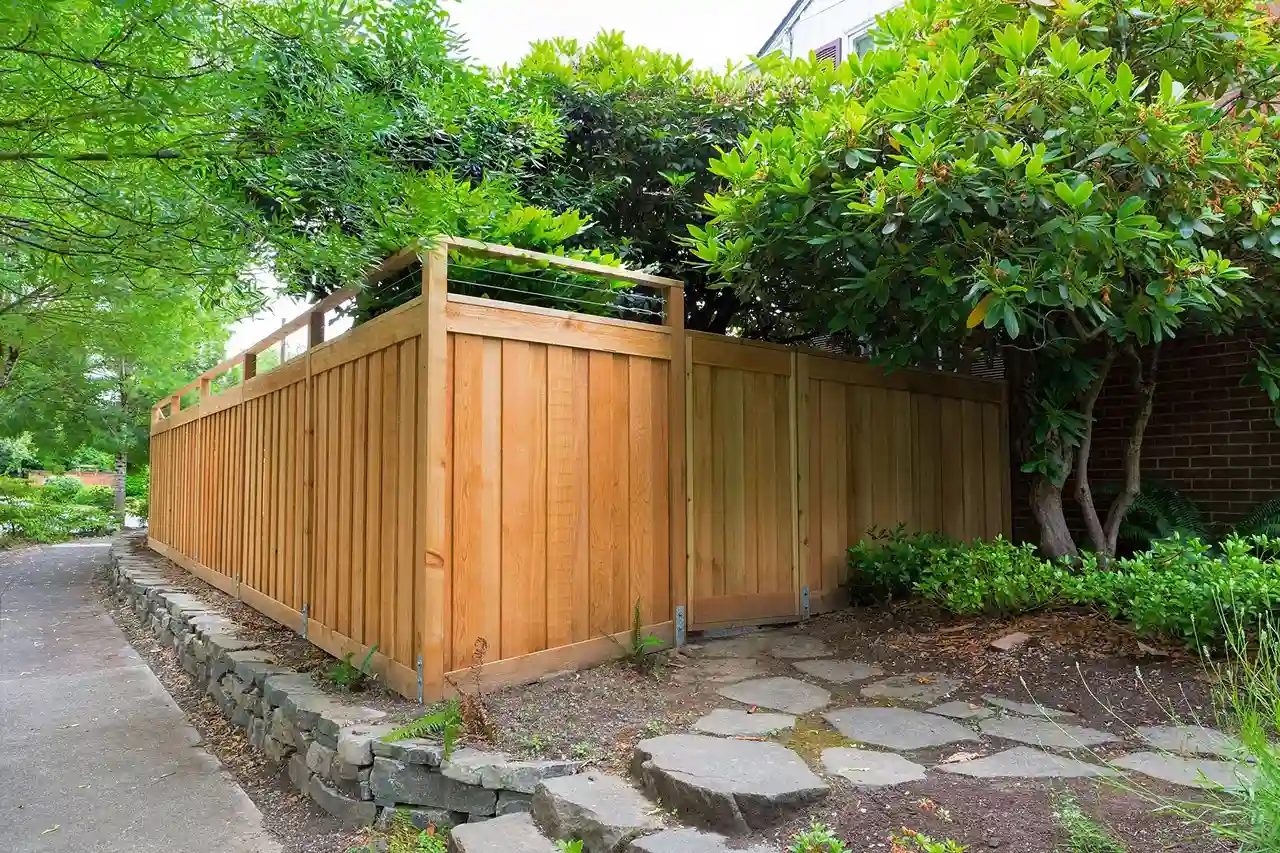
Wood privacy fencing gives you that classic backyard look and solid containment, but it comes with a few caveats for dog owners. It’s great for calm, medium-sized dogs that don’t dig or chew aggressively. But wood can warp, rot at the base, and develop gaps over time, especially in wet climates. A gap at the base of a wood fence is an open door for a small dog. Strong chewers can also work through lower-quality pine boards. If your dog is destructive, go cedar (it’s harder and more rot-resistant) or skip wood entirely. Wood fencing runs $15–$50 per linear foot depending on species and style. Want the full numbers? Our wood fence cost guide for 2026 breaks it down.Aluminum Fence: Fine for Small Dogs, Not Ideal for Large Breeds
Aluminum fencing looks sharp and it’s rust-proof, which is a real plus in rainy climates. But it has limits when it comes to dogs. Most aluminum fences max out at 4–5 ft in height, which isn’t enough for large or athletic breeds. The picket spacing on standard panels also leaves gaps that small dogs or puppies can squeeze through, though “puppy picket” options close those gaps up. For small dogs in a suburban yard where aesthetics matter, aluminum works well. For a 90-lb Labrador that loves to jump? Not the right call.What About Invisible Fences?
Electronic containment systems cost $3–$9 per linear foot and require no digging or installation of physical panels. They seem like an easy fix. But here’s the problem: an invisible fence keeps your dog in, but it doesn’t keep anything else out. Stray dogs, wildlife, and unfortunately people can walk right into your yard. According to VCA Animal Hospitals, invisible fences also don’t work well for dogs with high prey drive and can cause anxiety in some breeds. Use one as a backup layer inside a physical fence if you want. But don’t rely on it as your only containment system.Fence Height by Dog Size: Quick Reference
| Dog Size | Breed Examples | Minimum Fence Height |
| Small (under 40 lbs) | Beagle, Corgi, Terrier | 3–4 ft |
| Medium (40–70 lbs) | Labrador, Border Collie | 4–5 ft |
| Large (70–100 lbs) | German Shepherd, Golden Retriever | 6 ft |
| Giant or Jumper | Great Dane, Husky, Malinois | 6 ft + roller/angled top |
6 Ways to Make Any Fence More Dog-Proof
Even a good fence can have weak spots. Here’s how to fix the most common ones:- Bury wire mesh underground. Run it 12–18 inches below the fence line to stop diggers.
- Add a coyote roller or angled top. Rollers spin when a dog grabs the top, making it impossible to get a grip.
- Remove anything near the fence. Firewood stacks, lawn chairs, AC units, all of these become jumping platforms.
- Check the base gaps. Small dogs can squeeze through surprisingly small openings. Walk the perimeter after installation.
- Use concrete footers on gates. Gates are usually the weakest point. A concrete footer stops a dog from lifting or digging under.
- Pick self-latching gate hardware. Standard latches can be nosed open by clever dogs. Self-latching or padlocking gate hardware fixes that.
How Much Does a Dog Fence Cost?
Here’s a realistic range for full yard fencing:- Chain link: $1,000–$3,500 for an average yard
- Vinyl privacy: $2,500–$6,000+
- Wood privacy: $2,000–$5,500+
- Aluminum: $2,500–$6,000+
Chain Link Fence Slats for 2026: Privacy Options, Types, Costs & Installation Guide

Pool Fence Ideas for 2026: Styles, Materials & Safety Tips
Fence Gate Ideas for 2026: Styles, Materials & Design Inspiration
Can You Build a Fence on the Property Line? A State-by-State Guide
Fence Height Regulations: The Complete US Guide for Homeowners