
Chain Link Fence Slats for 2026: Privacy Options, Types, Costs & Installation Guide
Quick answer: the best fence gate idea for your property depends on your fence material, how the gate will be used (foot traffic vs. vehicle access), and how much upkeep you want. Wood and cedar gates offer the most classic look, vinyl and aluminum need the least maintenance, and automated options add convenience for driveways. Below, we break down the most popular gate styles and materials for 2026, how to size a gate correctly, what affects cost, and how to keep a gate working smoothly for years.
Wood and cedar remain the most classic choice for a fence gate, and for good reason. A cedar fence gate pairs naturally with a cedar fence line, giving your property a cohesive, timeless look, while picket-style wood gates add a charming, traditional feel to a front yard. The tradeoff is upkeep. Wood and cedar gates need periodic staining or sealing to resist weathering, but many homeowners find the natural look worth the extra maintenance.
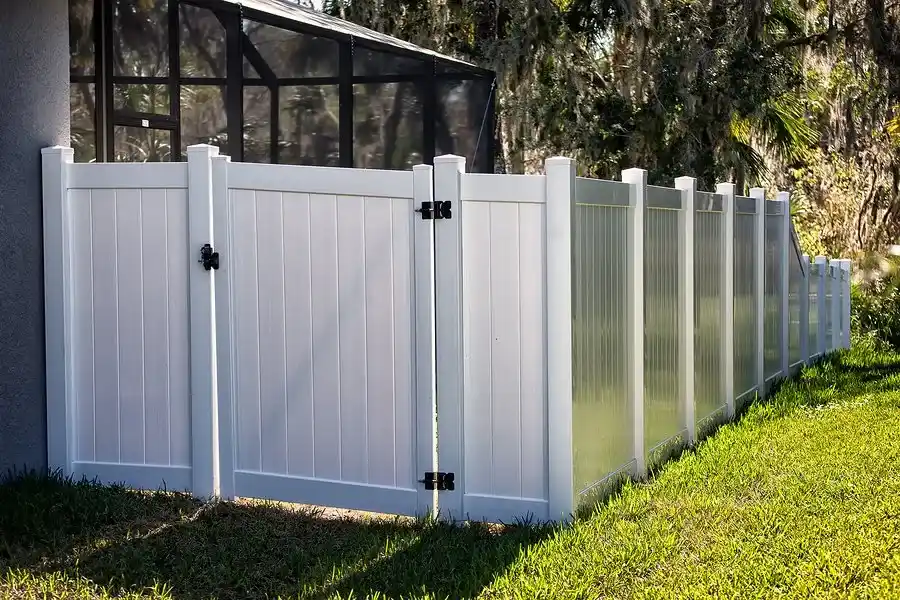
If low maintenance is the priority, vinyl and composite gates are worth a serious look. Both resist weathering, won’t rot or warp, and hold their color for years without staining or sealing. Vinyl gates work especially well paired with a full privacy fence, since the clean, uniform panels create a seamless look from fence to gate.
For a more contemporary look, aluminum gates offer clean lines and a metal finish that pairs well with modern home exteriors. Aluminum is naturally rust-resistant and holds up well outdoors without the upkeep wood requires, making it a popular choice for homeowners who want a sleek, low-maintenance gate that still stands out.
If you want something different from a traditional wood or vinyl gate, mixing materials can give your fence a more distinctive look. Pairing wood with metal, wire mesh, or corrugated panels creates a modern or industrial-style gate that still fits naturally into a residential landscape.
You can also mix materials in smaller details, such as a cedar gate with black metal accents or a wood gate with a contrasting metal latch and strap hinges. The key is choosing finishes that complement the rest of your fence and your home’s exterior.
Double-door gates, sometimes called double swing gates, open from the center outward and are a popular choice for wider access points such as driveways, side yards, or anywhere you need extra clearance. Because each side only needs to swing half the total width, double-door gates are often a practical option where a single wide gate would need more room to open fully, and splitting the width also puts less strain on each hinge post.
Automatic and sliding driveway gates add convenience, especially for driveways, letting you open and close your gate with a remote or keypad rather than getting out of the car. Sliding gates are also a good fit for properties with limited space in front of the driveway, since they move along the fence line instead of swinging outward.
If you’re considering an automatic gate, safety features matter as much as convenience. According to the U.S. Consumer Product Safety Commission, older automatic gates without proper sensing devices have been linked to serious entrapment injuries, particularly for children, which is why modern gates are built with reversing mechanisms that stop and reverse if they detect an obstruction. Professional installation helps ensure your automatic gate meets current safety standards.
Not every gate decision comes down to material. Sometimes it’s about where the gate goes and what it needs to do:
Whatever the placement, matching the gate’s style to its purpose usually gives the best result.
The right fence gate size depends on what needs to pass through it. Most residential walk-through gates are 3 to 4 feet wide, while driveway gates usually start around 10 to 12 feet wide for a single vehicle. Measure your widest item, whether that’s a riding mower, trash bin, or car, and size the opening with room to spare.
| Gate Type | Typical Width | Best For |
|---|---|---|
| Walk-through gate | 3 to 4 ft | Everyday foot traffic, push mowers, bikes |
| Equipment / side yard gate | 4 to 6 ft | Wheelbarrows, riding mowers, garden carts |
| Single driveway gate | 10 to 12 ft | Cars, SUVs, and trucks |
| Double driveway gate | 12 ft and wider | Wide driveways, trailers, angled vehicle entry |
These ranges reflect common residential sizes outlined in Angi’s fence gate size guide, which notes that 3 feet is generally the smallest practical gate and 12 feet is the widest common size, though some driveway gates go larger. A few planning tips help avoid problems after installation:
Fence gate cost depends on a few key factors: the material (wood and cedar are typically more budget-friendly than aluminum or custom ironwork), the gate’s size and width, and whether you’re adding automation. A simple wood or vinyl walk-through gate costs less than a wide double-door driveway gate, and adding an automatic opener adds to the price on top of the gate itself. For an accurate number based on your specific property, our fence price calculator gives you an instant estimate.
A sagging gate is one of the most common fence problems, and it’s usually caused by worn or undersized hinges, a gate that’s too heavy for its frame, or a gatepost that has started to shift in the ground. Using properly sized hinges, bracing the frame diagonally, and setting posts deep and secure all go a long way toward preventing sag before it starts. Beyond that, how much upkeep a gate needs depends mostly on its material.
| Gate Material | Maintenance Tips |
|---|---|
| Wood and Cedar | Inspect for moisture damage, rot, cracking, or peeling finish. Re-stain or seal when water stops beading on the surface. |
| Vinyl and Composite | Low upkeep. Wash occasionally with mild soap and water to remove dirt, pollen, and mildew. |
| Aluminum and Metal | Check for loose hardware, chipped finish, or corrosion spots. Touch up scratches so rust can’t start. |
| All Gate Types | Check hinges, latch, posts, and frame a few times a year. Tighten loose screws and lubricate hinges. Fix dragging or sticking early before it strains the posts. |
A small garden or walk-through gate can be a manageable project for an experienced DIYer. Larger wood or metal gates, double gates, and automatic driveway gates are better left to a professional, because the posts, hinges, and frame have to carry the gate’s full weight without shifting.
The basic process starts with measuring the opening, choosing the gate size, and checking swing or slide clearance. Before digging post holes, contact 811 a few days ahead so underground utility lines can be marked. Gate posts then need to be set deeper and more securely than standard line posts, since they carry a moving load, before the gate and hardware go on. A poorly supported gate can start to sag or bind even if the gate itself is well built.
Also check whether your city or HOA has rules on fence height, placement, permits, or gate design. Buy A Fence’s fence installation process walks through planning and installation step by step.
Vinyl, composite, and aluminum are the most low-maintenance options. All three resist weathering and don't require staining or sealing, unlike wood or cedar gates.
Most walk-through gates are 3 to 4 feet wide. Go 4 to 6 feet if you need to move a riding mower or wheelbarrow, and 10 to 12 feet or wider for a driveway gate.
In many cases, yes, though it depends on the gate's current material, weight, and frame. A professional installer can assess whether your existing gate can support an automatic opener or whether adjustments are needed first.
Start with properly sized hinges and a diagonally braced frame, and make sure the gatepost is set deep and secure. Most sagging gates trace back to one of these three issues.
A walk-through gate is sized for foot traffic and typically narrower, while a driveway gate is built wide enough for vehicle access and often includes automation. Many properties use both: a walk-through gate for everyday access and a wider driveway gate for cars.
Ready to bring one of these gate ideas to life? Get a free quote with our fence price calculator, or explore our driveway gate installation options today.
Get a Quick Quote With Estimate in Minutes.